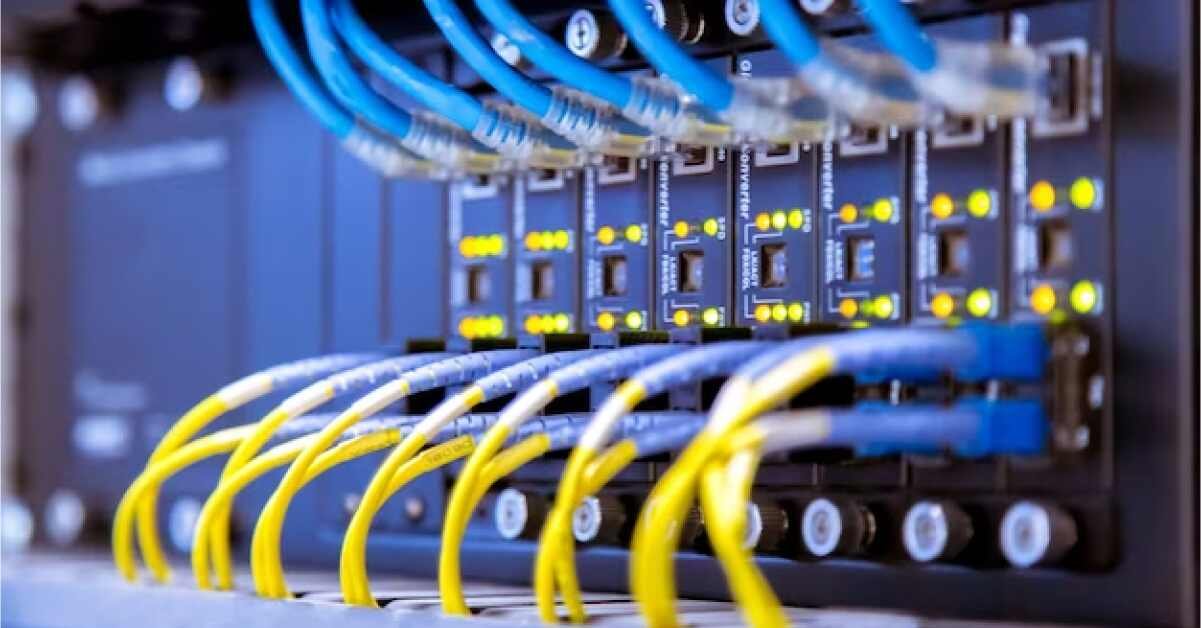
A network switch is a fundamental device used in computer networking to connect multiple devices within a local area network (LAN) and manage data traffic between them efficiently. It plays a key role in ensuring smooth, fast, and secure communication between devices such as computers, printers, servers, and other networked equipment. Unlike older networking devices like hubs, which simply broadcast data to all connected devices, a switch directs data only to the specific device it’s intended for. This helps to minimize network congestion and optimize overall performance.
Network switches primarily operate at the data link layer (Layer 2) of the OSI (Open Systems Interconnection) model, using MAC (Media Access Control) addresses to identify and communicate with devices on the network. Some advanced switches, called Layer 3 switches, also have routing capabilities and can handle data at the network layer, allowing them to manage traffic between different subnets.
The switch works by learning the MAC addresses of all devices connected to its ports and maintaining a MAC address table. When data (in the form of Ethernet frames) arrives at one port, the switch reads the destination MAC address and forwards the data only to the port associated with that address. This dedicated, point-to-point communication prevents unnecessary data traffic and ensures faster, more efficient network performance.
There are two main types of network switches:
- Unmanaged Switches: These are basic, plug-and-play devices with minimal configuration options. They are ideal for simple, small-scale networks where ease of use is more important than advanced features.
- Managed Switches: These offer extensive configuration capabilities, including VLAN (Virtual Local Area Network) support, Quality of Service (QoS) for traffic prioritization, network monitoring, port mirroring, and security settings. Managed switches are essential for larger, more complex networks where performance, scalability, and control are crucial.
Additionally, switches can vary in size and capability:
- Desktop Switches: Compact and designed for home or small office use.
- Rack-mounted Switches: Larger and designed for enterprise-level networks, often featuring multiple high-speed ports.
- PoE (Power over Ethernet) Switches: These provide power and data connectivity to devices like IP cameras and wireless access points through a single Ethernet cable.
Overall, network switches are a cornerstone of modern networking infrastructure, enabling efficient data transfer, reducing network collisions, and improving the overall speed and security of the network. Whether for small home setups or large corporate environments, the right switch ensures seamless and reliable connectivity.

.png)
 For Client
Support:
For Client
Support:

 Product